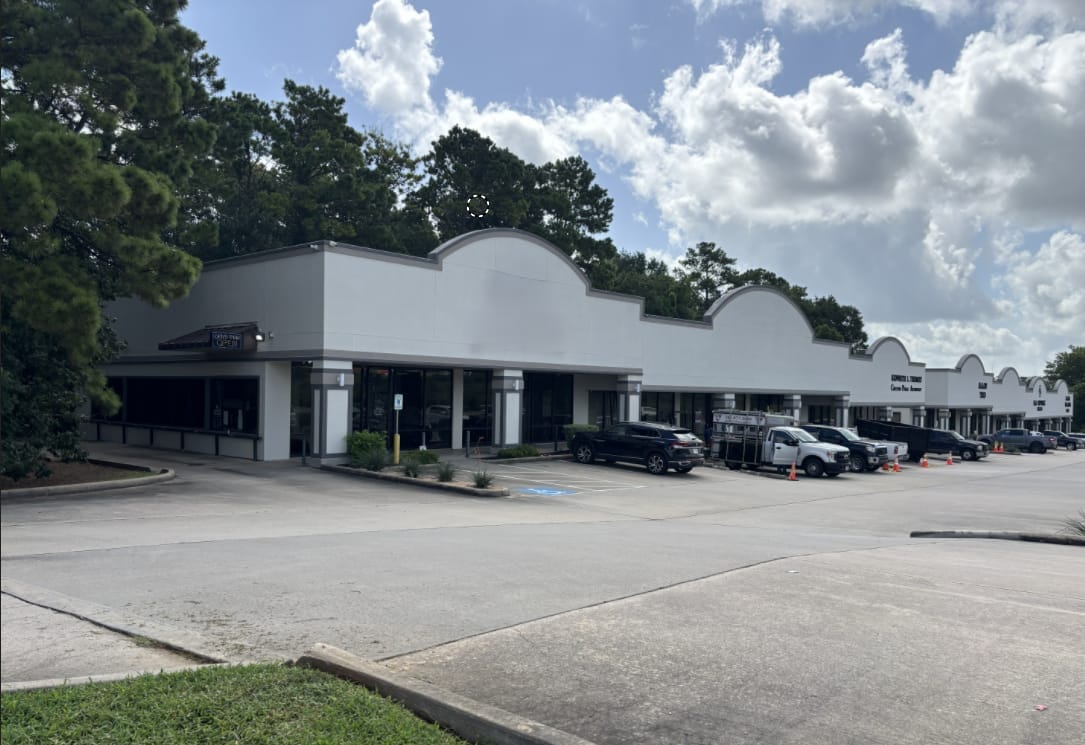
Everything in this frame is a budget line: the lot, the stripes, the stucco, the sidewalks, the lights on the parapet. Most of them get a number in September that somebody guessed at in August.
Every fall, the same spreadsheet lands on every property manager's desk. Ownership wants next year's operating and capital budget by October, sometimes September, and the exterior lines are the ones that get guessed at. Last year's number plus three percent. A vendor quote from 2023. A round figure that felt safe.
The problem is that exterior maintenance is where the expensive surprises live. The lot that needed a $4,000 seal coat two years ago now needs a $60,000 overlay. The wall packs that were "fine" are now a tenant complaint and a liability. The budget that was built on guesses gets blown by the first real repair, and the rest of the year is spent explaining variance.
Across the retail centers, office parks, and industrial properties we maintain in Greater Houston, the same twelve exterior line items show up on almost every budget. This post lays them out with the unit costs we actually charge, the cadence each one runs on, and a simple way to decide what gets funded first when the number ownership approves is smaller than the number you asked for.
How to Build It: Units, Not Round Numbers
The single biggest improvement you can make to an exterior budget is to build every line from a measurable unit. Square feet of pavement. Linear feet of crack. Number of stalls. Number of fixtures. Once you have the quantities, the budget becomes arithmetic, and you can defend every line to ownership with a number instead of a feeling.
You need four measurements to do this for almost any property, and you can get all of them in an afternoon with a measuring wheel or from a site plan:
- Total paved area in square feet (asphalt and concrete separately if the lot is mixed)
- Number of parking stalls, including ADA stalls and fire lanes
- Linear feet of building frontage and sidewalk
- Count of exterior light fixtures, wall packs and pole heads
Everything below keys off those four numbers. If you want a head start, our parking lot maintenance checklist walks the lot in the order an inspector would and gives you the quantities as you go.
One more input worth knowing: costs for this work do not sit still. The Bureau of Labor Statistics Producer Price Index tracks asphalt, paint, and construction-material pricing month to month, and it is the honest answer to "why is this line higher than last year." If you are carrying a 2023 quote into a 2027 budget, check it against the index before you defend it.
The 12 Line Items
Prices are what MSM charges across Greater Houston as of fall 2026. Every property is different, and a free on-site estimate replaces these ranges with real numbers for your site. But they are close enough to build a budget on.
| # | Line item | Houston unit cost | Typical cadence | Budget category |
|---|---|---|---|---|
| 1 | Seal coating | $0.15–$0.25 / sq ft | Every 2–3 years | Capital / reserve |
| 2 | Crack fill | $1–$3 / linear ft | Annually, before seal coat | Operating |
| 3 | Asphalt patch / pothole repair | Varies by area; carry an allowance | As needed; inspect quarterly | Operating |
| 4 | Restriping | ~$1,800 small lot · $3,500–$4,500 mid-size (100+ stalls) · $5,000+ large or redesign | Every 2–4 years, or after seal coat | Operating |
| 5 | Bollards | $300–$600 each installed | One-time; replace on impact | Capital |
| 6 | Wheel stops | $75–$150 each installed | Replace 5–10% per year | Operating |
| 7 | Pressure washing (sidewalks, common areas) | $0.10–$0.25 / sq ft; $500–$2,000 for a mid-size center | 2–4 times per year | Operating |
| 8 | Exterior repair (stucco, concrete, sidewalks, canopies) | $500–$1,500 minor · $5,000–$25,000+ larger remediation | Annual allowance | Operating + capital |
| 9 | Wall pack / pole light replacement | $250–$500 per fixture | 10–20% of fixtures per year, or LED retrofit all at once | Operating (capital for retrofit) |
| 10 | ADA signage and markings | $150–$300 per sign installed | Audit annually; replace as needed | Operating |
| 11 | Fencing | $15–$30 / lf chain link · $25–$45 / lf wood privacy | Repair allowance annually; replace on 15–20 year cycle | Operating + capital |
| 12 | Junk haul-off and debris removal | $500–$1,500 per load | 1–3 loads per year; more with turnover | Operating |
A thirteenth line, a full center repaint at $15,000 to $40,000+, belongs in the capital plan on a 7 to 10 year cycle rather than the annual operating budget. We covered how to decide whether it is time in repainting your retail building.
Line Items 1–3: The Pavement
Pavement is the largest exterior asset on most Houston properties and the one where deferral costs the most. The math is simple. Seal coating and crack fill on a 40,000 square foot lot runs roughly $6,000 to $10,000 plus crack fill, every two to three years. An overlay on the same lot runs several multiples of that. Skipping two seal coat cycles does not save two seal coats; it moves the overlay forward by five or more years.
For 2027 specifically: fall is the seal coat window in Houston. Overnight temperatures need to stay above 50°F and the surface needs to be dry, which means roughly late September through early November. If your lot is due, budget it for Q4, not summer, and book it early. The window fills up.
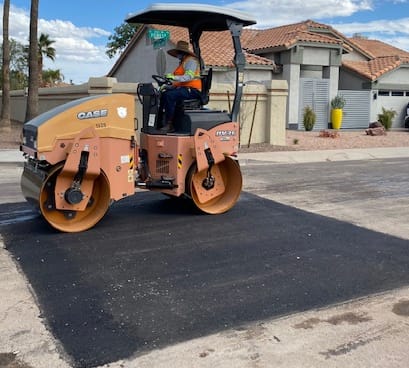
Patch and compaction on a section that was let go too long. The seal coat that would have prevented this costs a fraction of the repair.
Line Items 4–6: Striping and Safety
Restriping is the line most often over- or under-budgeted, because managers reach for a round number instead of counting stalls. A 60-stall lot with fire lanes and two ADA stalls is a very different job from a 180-stall lot with a redesign. Count the stalls, note whether the layout is changing, and use the tier that fits. If the lot is being seal coated, striping follows it and should be budgeted in the same quarter. Our post on restripe vs. repaint covers which one you actually need. For what drives striping quotes and how to compare scopes, see Facility Quote Hub's Houston parking lot striping cost guide.
Bollards and wheel stops are cheap relative to what they prevent. A storefront strike is a five-figure claim; a bollard is a few hundred dollars. Budget a small annual allowance for wheel-stop replacement (they get hit and crack) and treat new bollards as a one-time capital item wherever a storefront, gas meter, or transformer is exposed to a drive aisle.
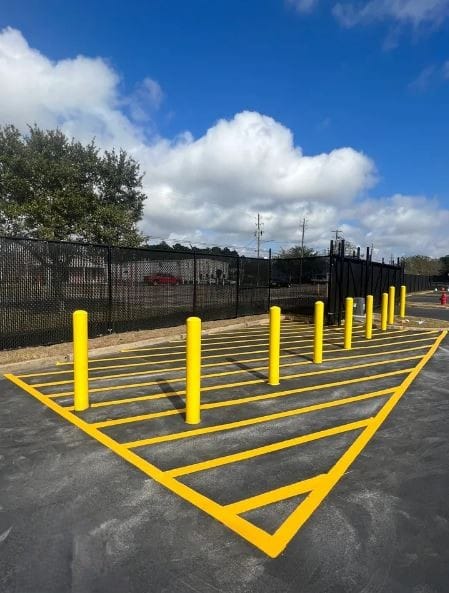
Stripes, hatching, bollards, and fence in one frame. Four line items, one crew, one mobilization.
Line Items 7–9: Surfaces, Structure, and Light
Pressure washing is the cheapest curb-appeal line on the sheet, and the one tenants notice most. Houston's humidity grows algae and mildew on north-facing walls and shaded sidewalks faster than almost anywhere in the country. Two cleanings a year is the floor for a retail center; four is typical for a center with restaurants or a grocery anchor. Budget by square footage of sidewalk and common area, not by "a wash."
Exterior repair is the hardest line to forecast because you do not know what will crack. The answer is an allowance, not a guess. For most centers in the 20,000 to 60,000 square foot range, a $5,000 to $10,000 annual allowance covers the stucco patches, sidewalk trip hazards, canopy repairs, and drainage fixes that come up. If you know a large remediation is coming, carry it separately as capital. And read where your roof water actually goes before you decide nothing is coming; drainage is the repair most owners find out about too late.
Wall pack and pole light replacement is the line to look at hardest this year. Daylight saving time ends November 1, and every dead fixture becomes visible to every tenant and customer the following Monday evening. Count the fixtures, walk the lot at night in October, and budget either a percentage replacement or, if more than a third are failing, a one-time LED retrofit. The Department of Energy's LED lighting guidance puts the operating-cost reduction at roughly 75% over incandescent and halogen, with fixture life measured in decades rather than seasons, which is why the retrofit usually pays for itself inside the budget cycle you are planning right now.
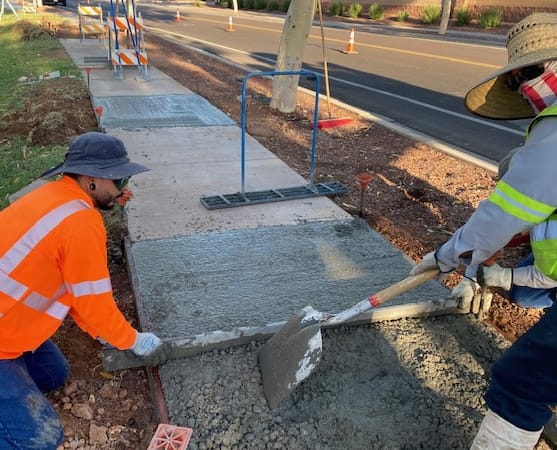
Sidewalk replacement on a frontage road. Trip hazards are the exterior repair that turns into a claim fastest, which is why they go at the top of the allowance.
Line Items 10–12: Compliance and Cleanup
ADA signage is a small line with a large downside. Signs fade, get hit, and go missing, and a missing sign at an accessible stall is a complaint waiting to be filed. The federal requirements for accessible parking, including the minimum count by lot size and the van-accessible ratio, are laid out plainly at ADA.gov. Audit once a year against that table and replace what is wrong. If the lot is being restriped, the audit happens for free.
Fencing shows up on industrial properties, HOA common areas, and the back side of most retail centers. Budget a repair allowance annually and know where the fence is in its life; chain link past 15 to 20 years and wood past 10 to 12 in Houston's climate is on borrowed time.
Haul-off is the line nobody budgets and everybody spends. Tenant turnover, storm debris, illegal dumping behind the dumpster enclosure. One to three loads a year is normal; more if you are turning suites.
What We See When the Budget Was a Guess
The pattern repeats across the properties we take over. The exterior budget was built as a single "R&M" line, usually last year's spend rounded up. The first real repair of the year, a settled sidewalk section or a failed rooftop drain, eats half of it by March. Seal coat gets pushed to next year to protect the remainder. Next year the same thing happens. Three cycles later the lot needs an overlay, the sidewalks have a trip-and-fall claim attached, and the lighting has been half dark since the previous November.
The centers that avoid this are not spending more. They are spending in a different order. The preventive lines, crack fill, seal coat, drainage, and lighting, are locked in the fall on a schedule, at unit prices, before the reactive repairs have a chance to crowd them out. That is the whole point of building the budget from quantities: the preventive work gets a number that can be defended in September instead of a leftover that gets spent in March.
What to Fund First When the Number Gets Cut
Ownership will approve less than you asked for. When that happens, rank the twelve lines by what they protect, not by what they cost.
- Liability and compliance first. ADA signage and markings, exterior lighting, trip hazards in sidewalks, and bollards at exposed storefronts. These are small lines, and cutting them is how a $300 sign becomes a claim.
- Items where deferral compounds second. Crack fill and seal coat, drainage repairs. A year's delay here is not a year's savings; it is a larger bill later.
- Tenant retention and leasing third. Pressure washing, striping, and the visible exterior repairs. These can slip a quarter without structural consequence, but they should not slip a year.
- True discretionary items last. Fence replacement on a fence that still works, cosmetic repairs on the back of the building, and the full repaint if the current paint is intact.
Exterior Maintenance Budgeting Services from MSM Services Texas
Twelve line items usually means five or six vendors, five or six insurance certificates, and a manager spending Q1 chasing quotes that could have been locked in Q4. That is the reason we offer an annual maintenance contract: one scope, one crew, photo documentation on every visit, and a fixed schedule for the recurring lines so the budget you build in September is the budget you actually spend.
Whether you contract it or bid it out, the free on-site estimate is the fastest way to turn the ranges above into real numbers for your property. We will walk the center, take the four measurements, and hand you a line-by-line estimate you can paste into the budget, usually within a week. Owners who want the full operating and capital budget built and managed for them, not just the exterior lines, should also talk to our sister company, Olivewood Management.
Get Real Numbers for Your 2027 Budget Before It Goes to Ownership
Free site walk. We'll measure the lot, count the stalls and fixtures, and quote all twelve lines at unit prices you can defend, typically within a week of the visit.
A budget built from quantities survives contact with the year. Call MSM Services Texas at 713-322-9095 or request a free estimate online. We serve commercial properties in Katy, Sugar Land, The Woodlands, Cypress, and across the Houston metro, and we will get you a line-by-line number before the budget is due.